The
objective of the game is to earn the lowest number of total strokes after
playing 18 holes of dice golf. Players earn a stroke every turn
as they attempt to move the ball closer to, and eventually in to, the cup at
the end of the hole. Players must weigh the benefits of avoiding hazards
with short, easy shots against the potential to shave a stroke off their
score by taking riskier, longer shots.
·
5 x standard 6-sided dice
·
4 x player marker tokens (small cube)
·
12 x mulligan tokens (poker chips)
·
1 x pencil
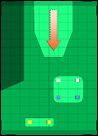
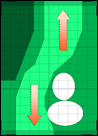
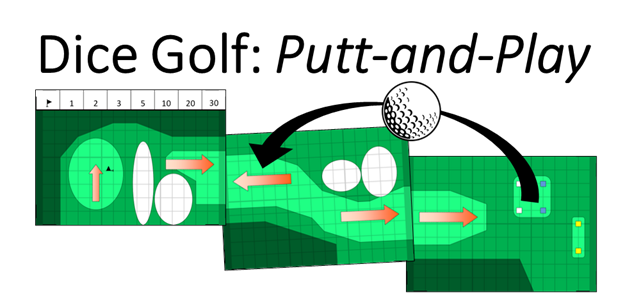
· 2 x tee cards (double sided)
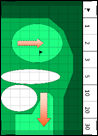
· 4 x fairway cards (double sided)
· 2 x green cards (double sided)
· 1 x score card
|
|
|
|
|
Tee |
Fairway |
Green |
· Jumbo sized cards with bleed (recommended)
Each
player is given a colored token to track their position on the cards, along
with three mulligan tokens. Write each player’s name on the scorecard.
If
a specific course layout is to be played (see appendix) then it is decided
ahead of time. Otherwise, determine the par value (3,4,5, or rarely 6)
for each of the 18 holes ahead of time (typically with an average par value of
4 for the course).
1. See the score card to
determine the par for the hole (3,4,5, or rarely 6)
2. Deal one tee card and one
green card randomly, on a random side
3. For each par above
three, deal one fairway card randomly, on a random side
4. Arrange the cards so that
the fairways line up at the borders between cards
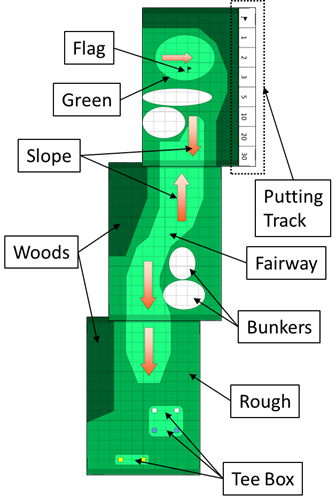
1. If a player has fewer total strokes
than every other player, they place their token on the farthest tee spot
2. If a player has more total strokes
than every other player, they place their token on the closest tee spot
3. All other players place
their token on the middle tee spot
·
Each player’s turn counts as a stroke – because
turns are not taken in order, players must keep a mental tally of strokes taken
so far on the current hole
·
The player who is farthest from the hole has ‘honors’ and takes
the next turn – play continues at the current hole until all players have
‘holed-out’ while putting or accumulated par+3 strokes on the hole (triple
bogey)
1. If your token is in the water
or out of bounds (outside of the card grid):
·
Move the token to the edge of the hazard ‘at the point where
it entered the hazard’ – use your judgement and get consensus from all
players
·
Add one extra stroke, as a penalty, to your score for this
hole
2. If your token is on the putting
track, see the Putting section, otherwise, see the Lofted Shot
section
After
all players have finished putting the hole is complete.
1. Record the number of strokes
earned by each player on the score card
2. Each player earns a mulligan
token for every stroke they earned less than the par value for the hole
3. Pick up all the hole cards
and return them to their respective piles
Lofted shots are used to advance the player’s token along the hole, with the ultimate goal of getting it onto the green as close to the flag as possible.
1. Pick a target location on
the hole – your shot will land here (and possibly bounce/roll onwards) if your
swing is perfect!
2. Count the Carry Distance
from your current location to your target location 10 yards per grid mark in
either direction
3. Consult the club chart based
on the Carry Distance
·
Not all clubs can be used from every terrain – see base
curve risk chart
·
Players can elect to add extra distance to a given club in
exchange for an extra curve risk for every 10 yards added
|
Carry Distance |
Club |
Swing Dice |
Run Dice |
|
220+ |
Driver |
5 |
5 |
|
210 |
2-Wood |
4 |
5 |
|
200 |
3-Wood |
4 |
5 |
|
190 |
4-Wood |
3 |
5 |
|
180 |
5-Wood |
3 |
4 |
|
170 |
2-Iron |
3 |
4 |
|
160 |
3-Iron |
3 |
4 |
|
150 |
4-Iron |
2 |
3 |
|
140 |
5-Iron |
2 |
3 |
|
130 |
6-Iron |
2 |
3 |
|
120 |
7-Iron |
2 |
2 |
|
110 |
8-Iron |
2 |
2 |
|
100 |
9-Iron |
2 |
2 |
|
10-90 |
Wedge |
1 |
1 |
4. Move your token to the
target location
1. Roll a
number of dice based on the value of the Swing Dice column in the
club chart
·
Add an additional die if hitting from woods or bunker
2. Interpret the results of each die individually by using the swing die chart:
|
Die Value |
Effect |
|
1 |
-10 yards carry distance |
|
2 |
+10 yards carry distance |
|
3 |
+1 curve risk |
|
4 |
Nothing |
|
5 |
Nothing |
|
6 |
Nothing |
3. Move your token forward or
backward depending on the total modification to the Carry Distance
1. Determine your base Curve
Risk level from the terrain at the starting point of the shot and the club
used:
|
|
Wedge |
Iron |
Wood |
Driver |
|
Tee Box |
1 |
1 |
2 |
2 |
|
Fairway |
1 |
2 |
3 |
N/A |
|
Rough |
1 |
2 |
4 |
N/A |
|
Woods |
2 |
4 |
N/A |
N/A |
|
Bunker |
2 |
4 |
N/A |
N/A |
2. Add any additional curve
risk earned from the swing dice to determine the total curve risk
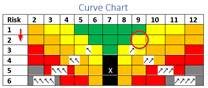
3. Roll two curve dice and add
their values, then consult the row on the curve chart corresponding to the
curve risk of the shot to determine the total curve of the shot
|
Risk |
2 |
3 |
4 |
5 |
6 |
7 |
8 |
9 |
10 |
11 |
12 |
|
1 |
|
|
|
|
|
|
|
|
|
|
|
|
2 |
|
|
|
|
|
|
|
|
|
|
|
|
3 |
|
|
|
↖ |
|
↗ |
|
|
|
||
|
4 |
|
|
↖↖ |
|
|
|
↗↗ |
|
|
||
|
5 |
|
↖↖↖ |
|
|
X |
|
|
↗↗↗ |
|
||
|
6 |
↖↖↖↖ |
|
|
|
|
|
|
|
↗↗↗↗ |
||
4. Move your token left or
right a number of grid spaces based on the total
curve result
·
If the token is now in sand or water end your turn
·
Rolling a 7 at risk level 4 and above is a complete miss – move
your token back to its starting position! Unless you started in woods,
immediately end your turn
·
Roll a number of dice based on the
value of the Run Dice column in the club chart
·
Determine the total bounce distance and total roll distance
based on the value of each individual die according to the run die chart:
|
Die Value |
Effect |
|
1 |
+10 yards bounce |
|
2 |
+10 yards roll |
|
3 |
+10 yards roll |
|
4 |
Nothing |
|
5 |
Nothing |
|
6 |
Nothing |
·
Move your token forward (or backward if your token is in the
woods!) based on the total bounce distance – if the token is now in
woods, sand, or water end your turn
·
Move your token in the same direction as the bounce based on
the total roll distance, one grid space at a time
·
You need 20 yards of roll distance to move one space through
the rough or against a slope arrow (uphill)
·
You only need 5 yards of roll distance to move one
space along a slope arrow (downhill)
·
If at any point you roll into woods, sand, or water end your
turn
If
your token is currently on the green, move it to the putting track on the green
card based on its distance from the flag
·
Distance is calculated as 10 yards per straight grid space,
15 yards per diagonal, with the total rounded down to the closest 10 yards
·
If the token is on the same grid space as the flag then set its location on the putting
track based on the club used:
·
Driver/Wood: 5 yards
·
Iron: 3 yards
·
Wedge: 10 yards, and immediately take a stroke-free putt
Putting takes place on the putting track along the side of the current green card. When putting players continue to try and advance their ball to the flag, with the ultimate goal of sinking their putt (‘hole-out’) and finishing the hole.
1. Roll a pair of dice and add
their values to calculate your putting accuracy
2. Calculate your new position
on the putting track based on your old distance (row) and putting accuracy
(column) in the putting chart:
|
Distance |
2 |
3 |
4 |
5 |
6 |
7 |
8 |
9 |
10 |
11 |
12 |
|
1 yard |
|
|
|
|
|
|
|
|
|
|
|
|
2 yards |
|
|
|
|
Hole-out! |
|
|
|
|
||
|
3 yards |
|
|
|
|
|
|
|
|
|
1 yard |
|
|
5 yards |
|
|
|
|
|
|
|
|
|
|
|
|
10 yards |
|
|
|
|
|
|
|
|
|
2 yards |
|
|
20 yards |
|
|
|
|
|
|
|
|
|
3 yards |
|
|
30 yards |
|
|
|
|
|
|
|
|
|
5 yards |
|
3. Move your token to the new
position on the putting track - if you hole-out, remove your token because
you have completed the hole
If
a player is ever unhappy with their own dice roll, they can elect to spend one
of their mulligan tokens to reroll any number of the dice from that
roll, leaving the remainder unchanged. The new result must be used, and a
second mulligan token cannot be spent on this roll.
At
‘the turn’ (after hole #9) each player earns one mulligan token for
every additional stroke they have scored compared to the current winner.
You
earn one stroke for every turn that you take in a hole. These strokes
are recorded on the score card throughout the game. At the end of the game, the
player with the fewest strokes wins.
Quick Reference Guide
1. Select target carry distance then move token
2. Roll and evaluate swing dice then move token
· +1 die if hitting from woods or bunker
3. Roll and evaluate curve dice then move token
4. Check landing terrain for hazards
5. Roll and evaluate run dice then move token
· Rolls are affected by terrain and slope
· Water, Off-Card: Add one stroke penalty, move token to the edge of the hazard where it entered
· Bunker: no bouncing or rolling
· Woods: bounces are backwards, no rolling
· Rough: half-speed rolling
|
Carry Distance |
Club |
Swing Dice |
Run Dice |
|
220+ |
Driver |
5 |
5 |
|
210 |
2-Wood |
4 |
5 |
|
200 |
3-Wood |
4 |
5 |
|
190 |
4-Wood |
3 |
5 |
|
180 |
5-Wood |
3 |
4 |
|
170 |
2-Iron |
3 |
4 |
|
160 |
3-Iron |
3 |
4 |
|
150 |
4-Iron |
2 |
3 |
|
140 |
5-Iron |
2 |
3 |
|
130 |
6-Iron |
2 |
3 |
|
120 |
7-Iron |
2 |
2 |
|
110 |
8-Iron |
2 |
2 |
|
100 |
9-Iron |
2 |
2 |
|
10-90 |
Wedge |
1 |
1 |
|
Die Value |
Effect |
|
1 |
-10 yards carry distance |
|
2 |
+10 yards carry distance |
|
3 |
+1 curve risk |
|
4 |
Nothing |
|
5 |
Nothing |
|
6 |
Nothing |
|
|
Wedge |
Iron |
Wood |
Driver |
|
Tee Box |
1 |
1 |
1 |
1 |
|
Fairway |
1 |
2 |
2 |
N/A |
|
Rough |
2 |
2 |
4 |
N/A |
|
Woods |
3 |
4 |
N/A |
N/A |
|
Bunker |
3 |
4 |
N/A |
N/A |
|
Risk |
2 |
3 |
4 |
5 |
6 |
7 |
8 |
9 |
10 |
11 |
12 |
|
1 |
|
|
|
|
|
|
|
|
|
|
|
|
2 |
|
|
|
|
|
|
|
|
|
|
|
|
3 |
|
|
|
↖ |
|
↗ |
|
|
|
||
|
4 |
|
|
↖↖ |
|
|
|
↗↗ |
|
|
||
|
5 |
|
↖↖↖ |
|
|
X |
|
|
↗↗↗ |
|
||
|
6 |
↖↖↖↖ |
|
|
|
|
|
|
|
↗↗↗↗ |
||
|
Die Value |
Effect |
|
1 |
+10 yards bounce |
|
2 |
+10 yards roll |
|
3 |
+10 yards roll |
|
4 |
Nothing |
|
5 |
Nothing |
|
6 |
Nothing |
Distance
from flag: 10 per straight grid, 15 per diagonal, rounded down – or if landing
directly on the flag:
·
Driver/Wood: 5 yards
·
Iron: 3 yards
·
Wedge: 10 yards, immediately take a stroke-free putt
|
Distance |
2 |
3 |
4 |
5 |
6 |
7 |
8 |
9 |
10 |
11 |
12 |
|
1 yard |
|
|
|
|
|
|
|
|
|
|
|
|
2 yards |
|
|
|
|
Hole-out! |
|
|
|
|
||
|
3 yards |
|
|
|
|
|
|
|
|
|
1 yard |
|
|
5 yards |
|
|
|
|
|
|
|
|
|
|
|
|
10 yards |
|
|
|
|
|
|
|
|
|
2 yards |
|
|
20 yards |
|
|
|
|
|
|
|
|
|
3 yards |
|
|
30 yards |
|
|
|
|
|
|
|
|
|
5 yards |
|
· Spend to re-roll any number of dice (keeping the remainder) once on a single roll
· Earned after completing hole #9, or when scoring under par on any hole
Example Hole Playthrough
Starting from
the middle tees, the target position for the first shot is just past the bunker,
leaving a lot of room for error. The target is 200 yards down, plus 10 yards right
(210 yards target carry distance: using the 2-wood club).
·
Swing
Dice: 1 3 4 4
·
Curve
Dice: 4 5
·
Run
Dice: 1 1 3 3 6
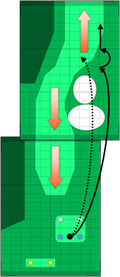
The swing and
curve dice caused the carry (lofted portion of the shot) to land shorter (by 10
yards) and to the right (by 20 yards) of the planned target.
The bounce
advanced the ball 20 yards. It took one roll dice to move the first 10 yards (the
rough and slope cancel out), but the second roll die moved the ball 20 yards
because of the slope on a fairway.
The target
carry for the second shot is the space just in front of the flag, hoping that
the run pushes it in for a birdie! The target is 100 yards down, plus 10 yards
left (110 yards target carry distance: using the 8-iron club).
·
Swing
Dice: 1 4
·
Curve
Dice: 3 5
·
The
Run Dice were not rolled
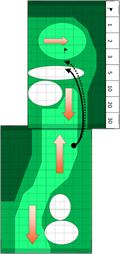
The swing and
curve dice caused the carry to land shorter (by 10 yards) of the planned
target, in the sand trap bunker.
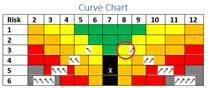
Because sand
traps do not allow bounce or run, the turn ends here.
The target
carry for the third shot is the flag, which is just 20 yards down (20 yards
target carry distance: using a wedge).
·
Swing
Dice: 4 5
·
Curve
Dice: 2 2
·
Run
Dice: 1
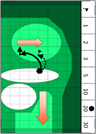
The swing and
curve dice caused the carry to land 20 yards to the left of the target, on the
green.
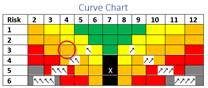
The run dice
caused the ball to roll an additional 10 yards on the green. The ball is now on
the green 25 yards from the hole (one straight and one diagonal space) so it is
moved to the 20 yard space on the putt tracker.
The putting dice
were rolled: 4 5
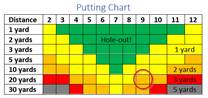
The token was
advanced to the two yard space on the
putting tracker.
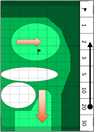
The putting
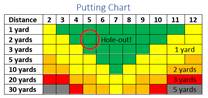
dice were rolled: 2 3
The token was
removed from the card and the player scored a five (on a par 4 hole).
The player
took a risk on stroke two to try and complete the hole in three strokes (to
earn a mulligan token!). Maybe the player should have spent a mulligan token to
re-roll their 1 on the swing die. Or maybe the player
should have been less greedy and aimed straight for the pin, almost
guaranteeing at least par (4) for the hole. What would you have done
differently?